Allen AI Explained (2026): How to Use It for Research, Blogging & Ranking Content
Allen AI explained (2026): Learn how to use Semantic Scholar for research, blogging, and creating high-authority content that ranks on Google.
AI TOOLS
DIPJYOTI SHARMA
5/3/20263 min read
Allen AI (2026): The Smart Creator’s Guide to Building Authority Content That Actually Ranks
Most content fails for one simple reason—it says nothing new.
In 2026, the internet is saturated with AI-generated articles that look polished but lack depth, originality, and credibility. Search engines are no longer rewarding speed—they’re rewarding substance.
This is where Allen Institute for AI (Allen AI) becomes a serious competitive advantage.
Not because it writes content for you—but because it helps you think better than your competition.
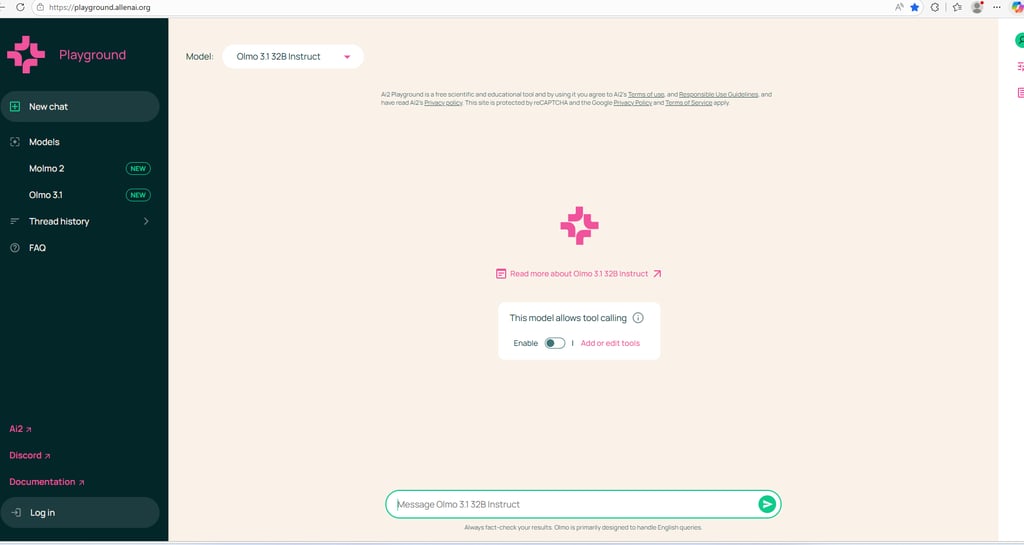
I tested Allen AI’s Playground interface to understand how researchers and creators can use open AI models for content research, SEO planning, and workflow experimentation.
Why Allen AI Is Different (And Why That Matters)
Most AI tools are built for output.
Allen AI is built for understanding.
That distinction is critical.
Instead of generating surface-level answers, Allen AI enables you to:
Access research-grade information
Identify patterns across studies
Build content rooted in real knowledge
In a search environment dominated by E-E-A-T, this is exactly what separates ranking content from ignored content.
The Core Advantage: Smarter Research with Semantic Scholar
At the center of Allen AI’s ecosystem is Semantic Scholar—a tool that quietly outperforms traditional search when it comes to depth.
Rather than pulling blog posts or opinion pieces, it surfaces:
Peer-reviewed research
Citation-backed insights
Condensed summaries powered by AI
This changes how you create content.
You stop guessing—and start building arguments supported by evidence.
How High-Performing Creators Use Allen AI
The difference between average and top-tier creators isn’t effort—it’s process.
Here’s the workflow that consistently produces high-authority content:
1. Start With Topics That Require Depth
Allen AI works best when the topic demands explanation, not just description.
Strong examples:
AI evolution and trends
Financial behavior and trading psychology
Technology-driven business models
These topics reward insight, not repetition.
2. Mine Insights, Not Just Information
When using Semantic Scholar AI, don’t just collect data—look for:
Repeated conclusions across multiple papers
Contradictions (these create unique angles)
Data points that can strengthen your argument
👉 This is where your content becomes different.
3. Translate Complexity Into Clarity
Raw research is not readable for most audiences.
Your job is to:
Break down complex ideas
Remove unnecessary jargon
Keep meaning intact
Tools like ChatGPT or Claude can assist—but they should support your thinking, not replace it.
4. Add Interpretation (Your Real Value)
This is the step most creators skip—and the reason most content fails.
After presenting insights:
Explain what they mean
Connect them to real-world outcomes
Add your perspective
👉 This transforms information into authority
5. Build a Strong Internal Content Network
Authority isn’t built from one article—it’s built from a connected system.
Use your site structure strategically:
For AI-focused insights →
https://simplifiedaihub.com/search/label/AIFor blogging strategies →
https://simplifiedaihub.com/search/label/bloggingFor tool-based content →
https://simplifiedaihub.com/search/label/tools
Full structure reference:
https://simplifiedaihub.com/sitemap.xml
This strengthens:
Topical authority
Crawl efficiency
Reader retention
How I Used Allen AI for SEO Research
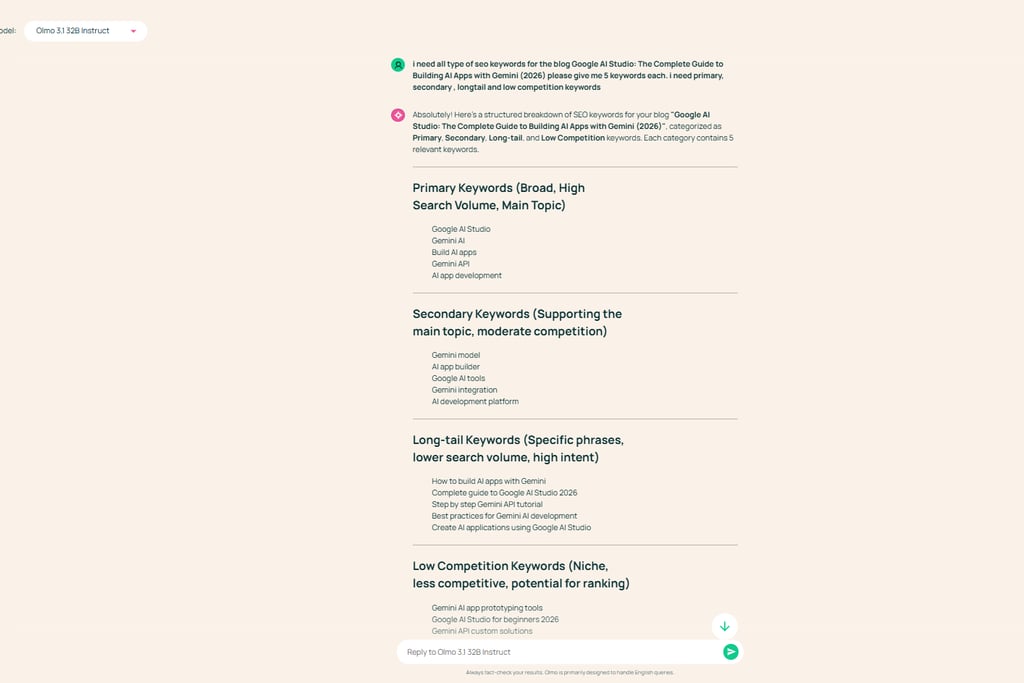
Instead of using generic keyword generators, I tested Allen AI to structure primary, secondary, long-tail, and low-competition keywords for a content strategy workflow.
Why This Approach Outperforms Standard AI Content
Most AI-generated articles follow the same pattern:
Predictable structure
Generic explanations
No supporting depth
Search engines have adapted.
They now prioritize content that demonstrates:
Original insight
Depth of understanding
Information gain
Allen AI enables all three.
The Strategic Shift (That Most Creators Miss)
There are two ways to create content today:
❌ The Common Approach
Generate → Edit → Publish
✅ The High-Performance Approach
Research → Analyze → Simplify → Publish
That one extra layer—analysis—is what drives:
Higher rankings
Longer engagement
Stronger trust signals
Micro-Upgrade Example
Weak:
“AI is growing rapidly in 2026.”
Upgraded:
“Recent research highlights accelerated AI adoption across industries, with measurable gains in operational efficiency and decision-making accuracy.”
The difference is subtle—but powerful.
Strengths and Limitations
Where Allen AI Excels
Produces insight-rich content
Enhances credibility
Supports long-form SEO strategies
Enables differentiation in saturated niches
Where It Requires Effort
Learning curve for research interpretation
No direct content generation
Requires deliberate thinking
Ideal Use Cases
Allen AI is best suited for creators focused on:
Long-form blogging
SEO authority building
Educational content
Research-backed storytelling
If your goal is fast content, this isn’t your tool.
If your goal is lasting content, it’s one of the best.
FAQs
Is Allen AI free?
Yes, tools like Semantic Scholar are freely accessible.
Can it replace writing tools?
No. It complements them by improving input quality.
Is it useful for SEO?
Extremely—because it increases content depth and originality.
Do beginners benefit from it?
Yes, but results improve significantly with practice.
Does it generate content automatically?
No—it strengthens your thinking so your content improves.
Additional FAQs
What makes Allen AI unique?
Its focus on open, research-driven AI rather than content generation.
Can it help with Medium articles?
Yes, especially for building authority in competitive niches.
Is it suitable for monetization?
Indirectly—through higher-quality blogs, ebooks, and content.
What is the best workflow?
Allen AI for research → AI tools for writing → SEO optimization.
Is this approach future-proof?
Yes—because depth and credibility will always outperform shortcuts.
Final Insight
Allen AI doesn’t make content easier.
It makes content smarter.
And in a digital landscape where most content is replaceable, that distinction is everything.
If you want to compete in 2026, don’t aim to publish faster.
Aim to publish better than everyone else.