
Netanyahu AI Video Explained: The Rise of Deepfake AI in 2026
A viral Netanyahu AI video is trending online. But is it real? Discover how deepfake AI works and why AI-generated videos are spreading rapidly.
AI NEWS
DIPJYOTI SHARMA
3/14/20266 min read
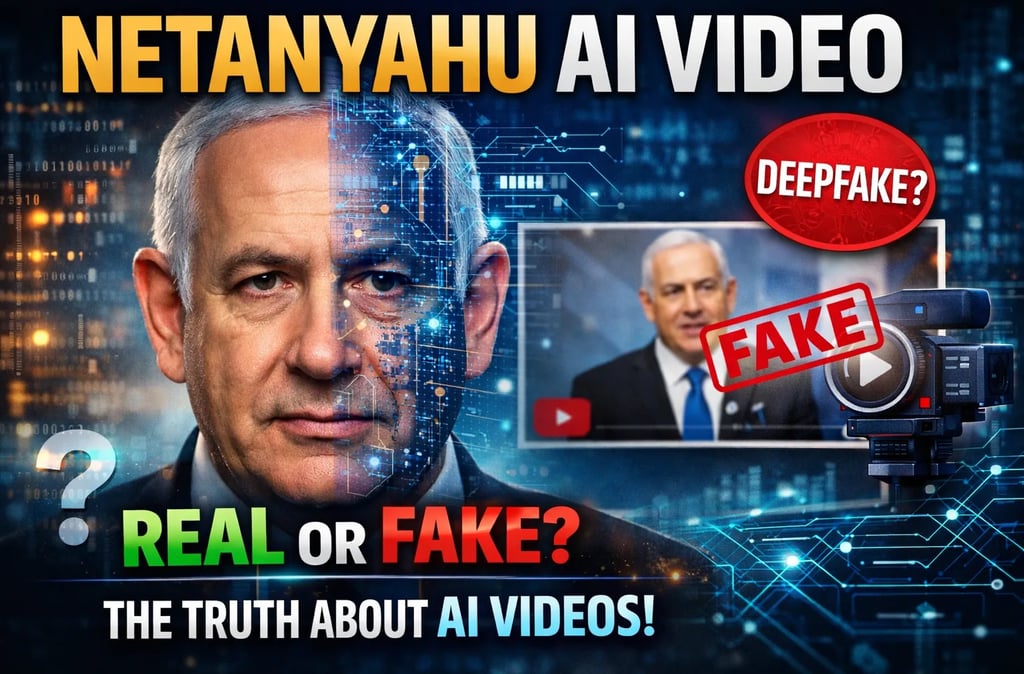
Netanyahu AI Video Explained: Why It’s Trending on Google and What It Reveals About Deepfake AI in 2026
Artificial intelligence has reached a point where it can create videos that look almost identical to real footage. One of the most talked-about examples recently is the Netanyahu AI video, which has been trending heavily on Google and social media.
People across the world are asking questions like:
Is the Netanyahu AI video real?
Who created the deepfake video?
How does AI generate such realistic content?
Can AI videos be trusted?
These questions highlight a growing issue in the digital world: AI-generated deepfake media.
Deepfake technology can replicate a person’s face, voice, expressions, and speech patterns, allowing creators to generate videos where public figures appear to say things they never actually said.
As artificial intelligence continues evolving, understanding deepfake technology is becoming essential for internet users, journalists, businesses, and governments.
In this comprehensive guide, we will explore:
What the Netanyahu AI video is
Why it is trending worldwide
How deepfake technology works
Real-world risks of AI-generated videos
Ways to detect fake AI videos
The future of AI-generated media
This article is designed as a complete pillar guide to AI deepfake videos.
Table of Contents
What Is the Netanyahu AI Video
Why the Netanyahu AI Video Is Trending Worldwide
Understanding Deepfake AI Technology
How AI Creates Realistic Fake Videos
Real Examples of Political Deepfake Videos
Why Deepfake Videos Go Viral Online
The Risks and Dangers of AI Deepfake Technology
How to Detect AI Generated Videos
AI Tools Behind Video Generation
The Role of AI in Content Creation
How Governments Are Responding to Deepfakes
The Future of AI Video Technology
Key Takeaways
Frequently Asked Questions
What Is the Netanyahu AI Video
The Netanyahu AI video refers to videos circulating online that appear to show Israeli Prime Minister Benjamin Netanyahu delivering speeches or statements that were never actually recorded.
These videos are created using AI deepfake technology, which allows artificial intelligence systems to generate extremely realistic visual and audio content.
Deepfake AI works by analyzing large datasets of:
video footage
facial movements
voice recordings
speech patterns
Using this data, AI can produce a video that mimics the individual convincingly.
To many viewers, the video appears completely authentic, which is why deepfake media can spread so quickly online.
Why the Netanyahu AI Video Is Trending Worldwide
Several factors explain why this topic has become one of the most searched AI topics on Google.
1. Political Sensitivity
When a video appears to show a world leader making controversial statements, it immediately attracts global attention.
Political videos are among the fastest types of content to spread online.
2. Viral Social Media Algorithms
Platforms such as:
YouTube
TikTok
Instagram
X (Twitter)
use recommendation algorithms that rapidly amplify viral content.
Once a video starts trending, millions of users see it within hours.
3. Curiosity About Artificial Intelligence
Deepfake technology still feels almost magical to many people.
When viewers see a highly realistic AI video for the first time, they often search online to understand how it was created.
Understanding Deepfake AI Technology
Deepfake technology combines two powerful AI techniques:
Deep Learning
Generative AI
These technologies allow computers to generate synthetic media that imitates real people.
Deepfake models use neural networks trained on thousands of images and videos.
The system learns patterns such as:
facial expressions
eye movement
voice tone
lip synchronization
Once trained, the AI can generate new content that mimics the original subject.
Deepfake technology is part of the broader artificial intelligence ecosystem, which includes tools for writing, design, automation, and business workflows.
For example, modern AI platforms now help businesses automate tasks and improve productivity.
https://simplifiedaihub.com/ai-automation-guide-2026-how-businesses-automate-work-using-ai
How AI Creates Realistic Fake Videos
Creating a deepfake video typically involves several stages.
Data Collection
The AI requires a large dataset containing images and videos of the target person.
Public figures often have thousands of hours of video online, which makes them easier to replicate.
Model Training
Machine learning algorithms analyze facial patterns and speech characteristics.
This allows the system to learn how the person moves and speaks.
Face Mapping
The AI maps the face onto another actor or video frame.
This creates realistic facial movement and expressions.
Voice Cloning
AI voice cloning tools can replicate speech patterns and tone, making the video sound authentic.
Video Rendering
Finally, the AI generates a complete video that appears real to viewers.
Real Examples of Political Deepfake Videos
The Netanyahu AI video is not the first example of deepfake political content.
Several high-profile cases have appeared in recent years.
Examples include deepfake videos of:
global political leaders
celebrities
business executives
These videos have been used for:
satire
political commentary
misinformation campaigns
The growing realism of AI-generated media has raised concerns among governments and technology companies.
Why Deepfake Videos Go Viral
Deepfake content spreads quickly because it combines several powerful internet dynamics.
Shock Value
Unexpected or controversial videos capture attention immediately.
Emotional Reactions
People tend to share content that triggers strong emotions.
Social Media Algorithms
Algorithms prioritize content that receives rapid engagement.
This combination often pushes deepfake videos into trending topics.
The Risks and Dangers of AI Deepfake Technology
While deepfake technology can be used creatively in entertainment and filmmaking, it also presents serious risks.
Misinformation
Fake videos can spread false information that appears credible.
Political Manipulation
Deepfakes could potentially influence elections or public opinion.
Reputation Damage
Individuals and organizations could suffer reputational harm from fabricated videos.
Security Risks
AI-generated impersonation could also be used in fraud or cybercrime.
These concerns have made deepfake detection a major research area in AI.
How to Detect AI Generated Videos
Although deepfake technology is becoming more advanced, there are still ways to identify fake videos.
Check the Source
If a video appears only on unknown social media accounts, it may not be authentic.
Look for Visual Inconsistencies
Deepfake videos sometimes show:
unnatural blinking
distorted facial edges
inconsistent lighting
Verify With Trusted Media
Major announcements from world leaders are usually reported by established news organizations.
If no credible news source confirms the video, it may be fake.
AI Tools Behind Video Generation
Many AI tools now allow users to create videos with minimal technical knowledge.
Some platforms can generate:
AI avatars
synthetic voices
AI video presentations
automated content creation
These tools are increasingly used by businesses and content creators.
If you want to explore the wider world of AI tools, this guide covers 50 powerful AI tools used by creators and businesses:
The Role of AI in Content Creation
Artificial intelligence is transforming digital content production.
Today AI can assist with:
blog writing
video production
graphic design
marketing automation
Many entrepreneurs are now building online businesses using AI tools.
For example, freelancers are using AI to create new income streams online.
https://simplifiedaihub.com/ai-side-hustles-guide-2026-15-best-ways-to-make-money-with-ai
You can also explore a complete guide to AI-powered online income opportunities here:
https://simplifiedaihub.com/how-to-make-money-with-ai-in-2026-complete-beginner-to-advanced-guide
These developments show how AI is reshaping the digital economy.
How Governments Are Responding to Deepfakes
Governments and technology companies are actively working to address deepfake risks.
Several approaches are being developed.
AI Detection Systems
Researchers are building AI tools designed to detect synthetic media.
Digital Watermarks
Some companies are embedding invisible watermarks in AI-generated content.
Regulation and Policy
Many governments are considering regulations for AI-generated media.
These measures aim to balance innovation with protection against misinformation.
The Future of AI Video Technology
AI video technology is evolving rapidly.
Experts expect several major developments in the coming years.
Hyper Realistic Digital Humans
AI avatars will soon look almost indistinguishable from real people.
Real Time Video Generation
Future AI systems may generate videos instantly during live broadcasts.
Advanced Deepfake Detection
AI detection systems will become more accurate and widely deployed.
As these technologies develop, digital literacy will become more important for internet users.
Key Takeaways
The Netanyahu AI video trend demonstrates how powerful artificial intelligence has become.
Important points to remember:
Deepfake AI can generate extremely realistic videos.
Political videos spread rapidly across social media.
AI-generated media can create misinformation risks.
Verifying video sources is essential before believing viral content.
AI video technology will continue evolving rapidly.
Understanding deepfake technology is becoming an important skill in the modern digital world.
Frequently Asked Questions (FAQs)
What is the Netanyahu AI video?
The Netanyahu AI video refers to AI-generated videos that appear to show Benjamin Netanyahu speaking or acting in ways that were never actually recorded.
Are Netanyahu AI videos real?
Many viral Netanyahu videos circulating online are created using deepfake technology and are not authentic recordings.
What is deepfake AI?
Deepfake AI is a technology that uses machine learning algorithms to generate synthetic media such as realistic videos or voice recordings.
Why are deepfake videos dangerous?
Deepfake videos can spread misinformation, manipulate public opinion, and damage reputations.
Can AI deepfakes be detected?
Yes. Experts analyze inconsistencies in facial movements, lighting, and audio to detect AI-generated content.
Will AI-generated videos become more realistic?
Yes. AI video generation technology is improving rapidly and will likely become even more realistic in the future.
📘 Want a Complete Online Income Blueprint?
If you’re serious about turning AI skills into real online income — not just learning tools — you need a structured system.
I explain the complete roadmap, including freelancing, digital products, blogging, and scalable income strategies, in my book:
This book is designed as a step-by-step implementation guide so you don’t need to jump between YouTube tutorials or random courses.
🔗 Get the book here:
The Ultimate Online Income System